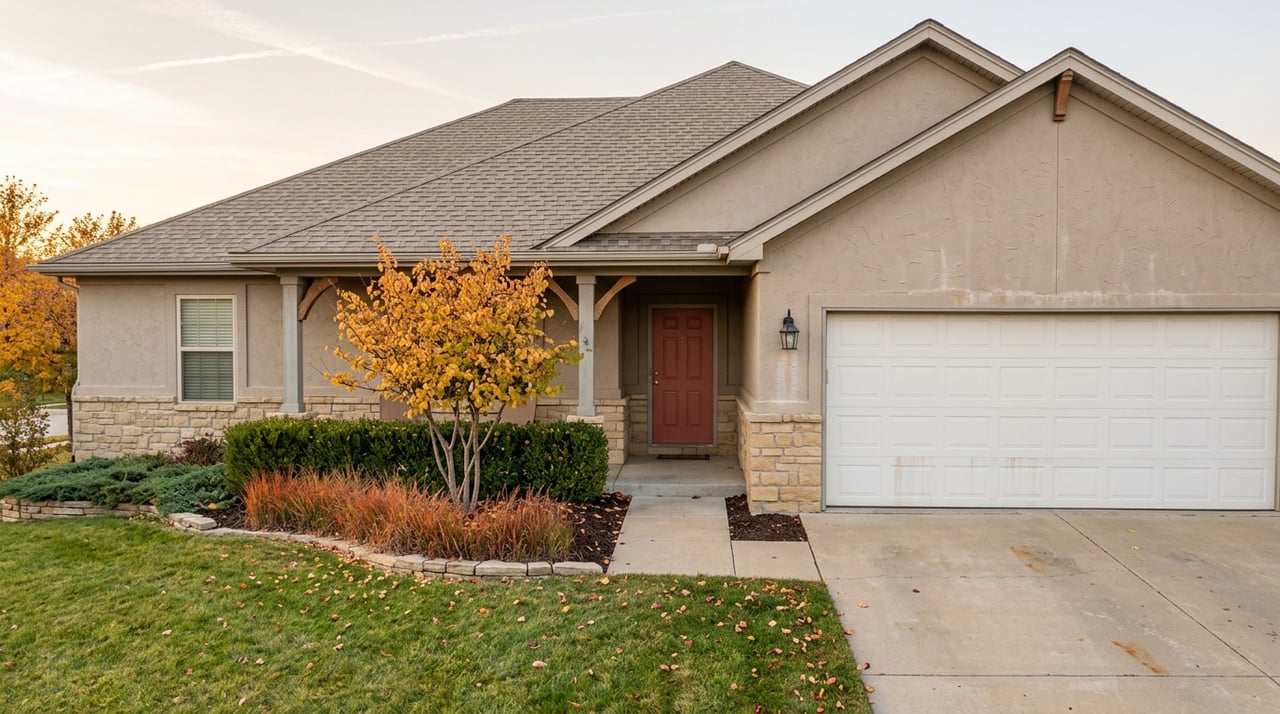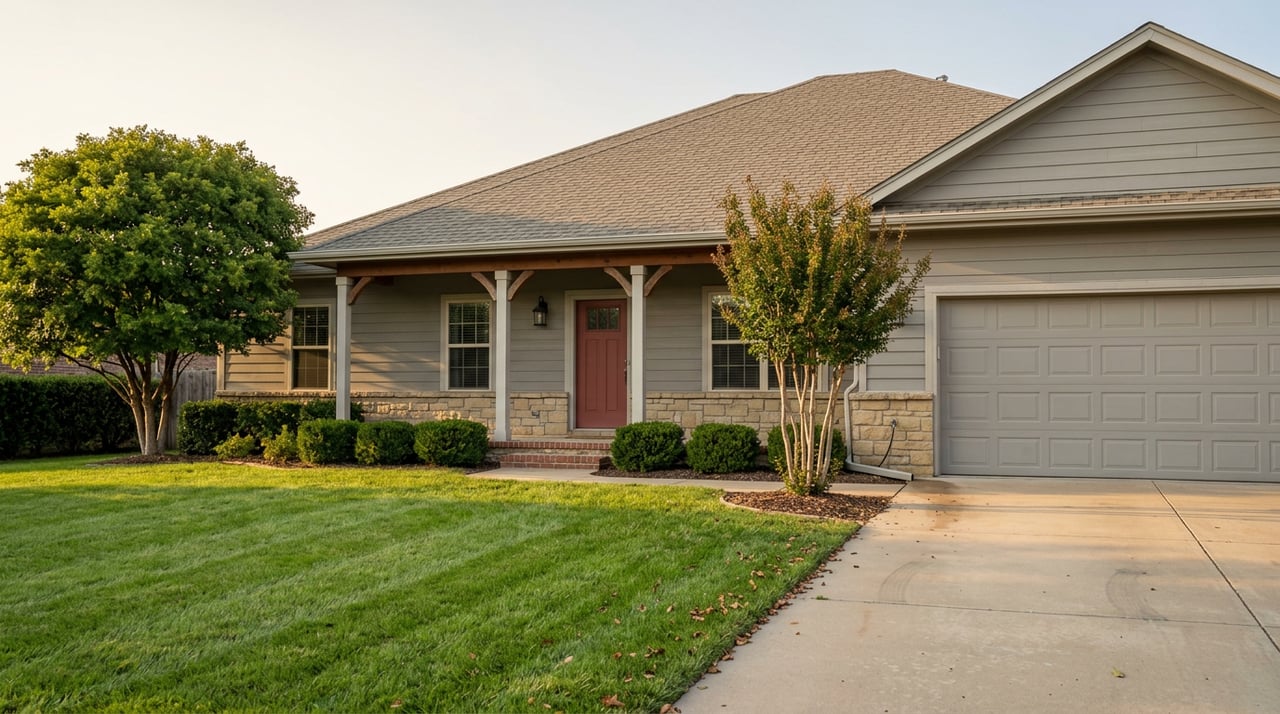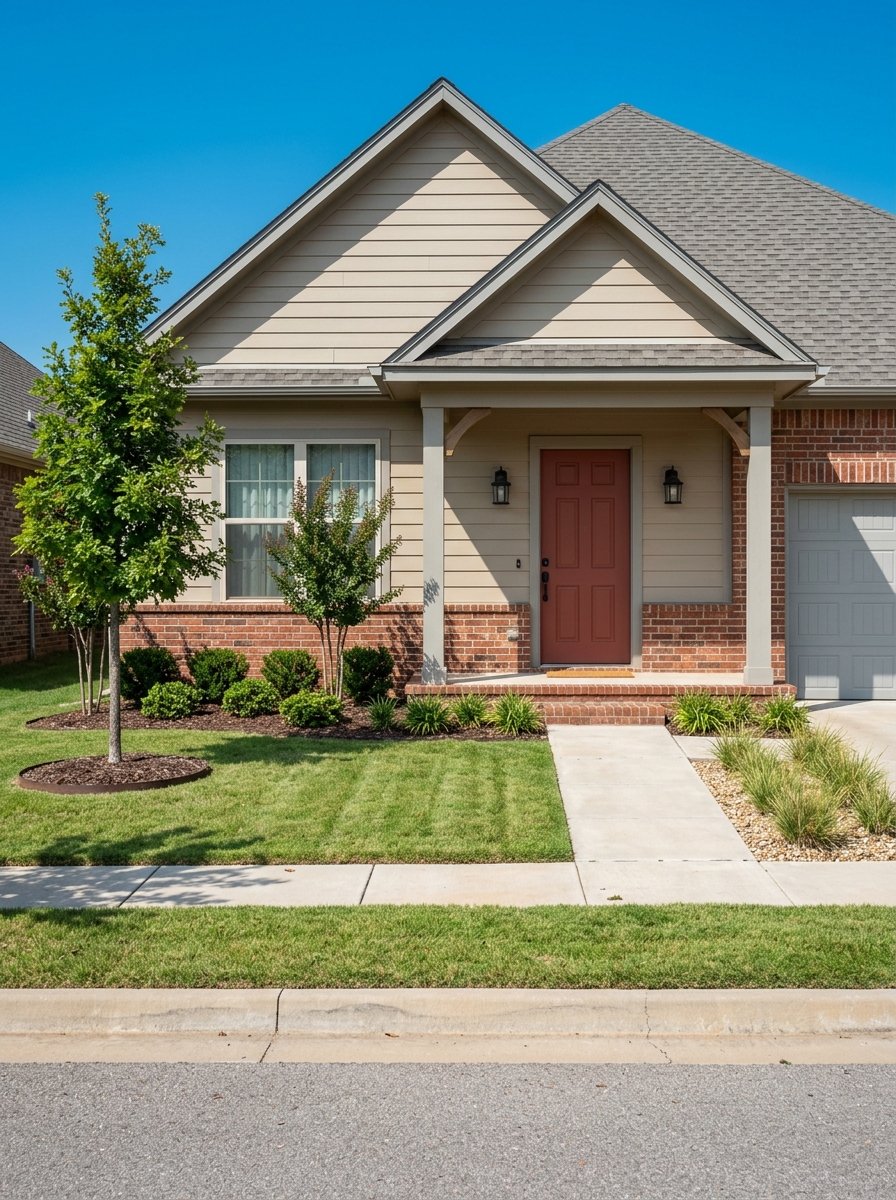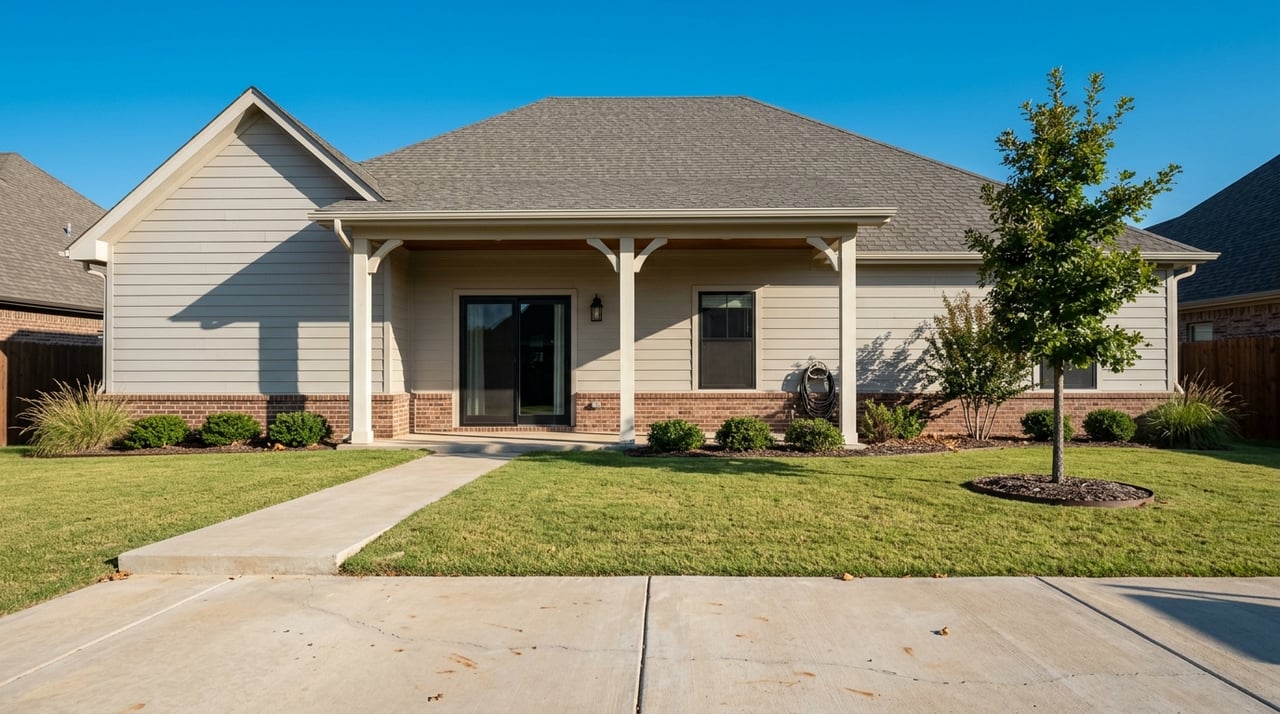
If you pulled the numbers on Downtown Edmond home sales this spring, you'd have seen something that almost never happens in a normal housing market. The median sale price in that pocket of the city jumped 280.6 percent in a single year, landing at $765,000 as of March 2026. Meanwhile, homes across the rest of Edmond were doing something close to the opposite: the citywide median sale price over the three months ending in May 2026 came in at $392,000, down 3.9 percent from the year before.
Same city. Same month. Two completely different stories. Neither one is wrong, but only one of them tells you anything about what's actually happening if you're trying to buy or sell in Edmond right now.
A Tax District Built to Move One Number
The number moving in Downtown Edmond isn't organic appreciation. It's the visible output of a financing tool the city has been running since 2020.
Edmond's TIF District No. 1, its first tax increment financing district, has helped attract $158 million in private investment into the downtown core and funded $17.5 million in public infrastructure upgrades to support that development, according to Edmond Urbanist, the local group that tracks the city's development pipeline. TIF financing works by letting developers collect the increased property tax revenue their own projects generate, rather than that revenue flowing straight into the general fund. It's a way to make a project pencil out in an area where land assembly, demolition, and historic building constraints would otherwise make new construction too expensive to attempt.
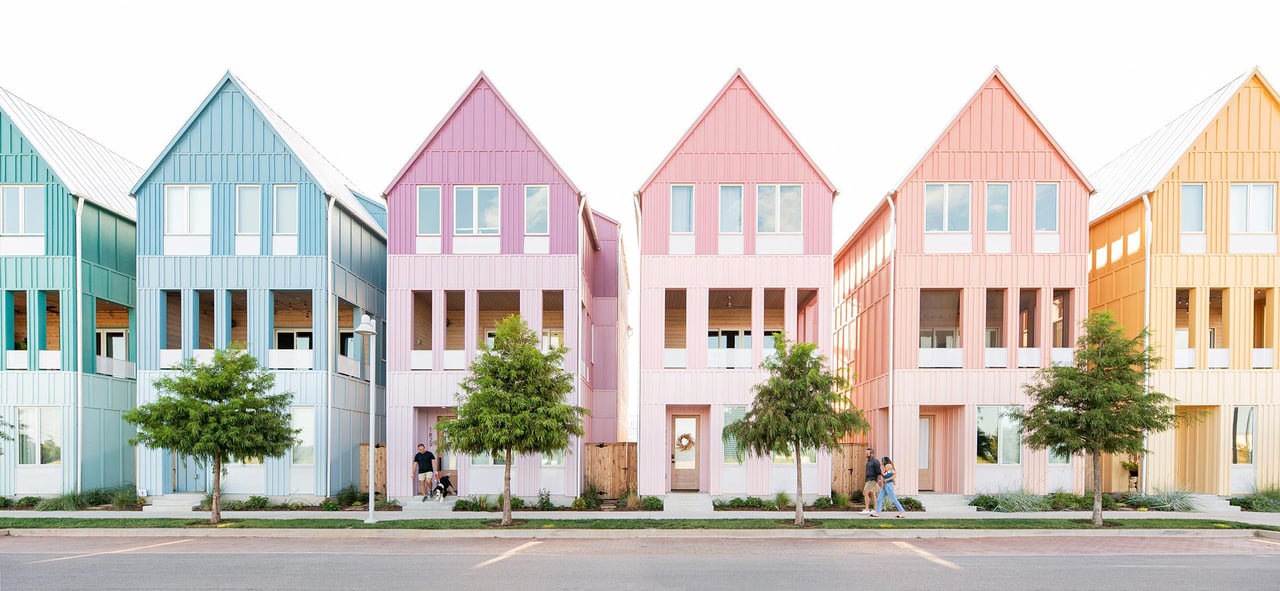
On September 14, 2026, the Edmond City Council approved two more TIF agreements that show exactly how this works in practice. One backs Hurd Courts, a set of live-work townhomes with ground-floor storefronts planned for North Santa Fe Drive and West Hurd Street. The other supports the renovation of 19 Broadway, the building at the southwest corner of Broadway and West Hurd Street, where plans call for Class A office and retail space on the upper two floors, a restaurant on the ground floor, and a basement speakeasy. The city is putting up to $450,000 in financing assistance into that renovation alone. Edmond Public Schools is set to receive 10 percent of the property tax revenue these projects eventually generate.
Those two deals join a list of TIF-supported or TIF-adjacent projects that have been announced or broken ground in the same few blocks over the past year or two.
| Project | Location | What it is |
|---|---|---|
| Hurd Courts | N. Santa Fe Dr. & W. Hurd St. | Live-work townhomes with ground-floor storefronts |
| 19 Broadway | Broadway & W. Hurd St. | Office, retail, restaurant, and basement speakeasy in a renovated building |
| The Ember | E. 9th & Boulevard, Parks District | Pocket neighborhood of luxury housing, under construction |
| The Townsend | Park District, along Littler | Live, work, and play mixed-use neighborhood |
| Capitol View infill | Historic Capitol View neighborhood | Six townhomes with detached garages on a vacant lot, built by Colon Holdings LLC |
Every one of these is a small project by national standards. But Downtown Edmond isn't a national market. It's a handful of blocks that historically hasn't had much for-sale inventory at all, which is exactly why a few of these closings can do so much damage to a median.
Why a Few Closings Move a Median More Than Hundreds Do
A median only tells you about the middle of whatever group of sales it's built from. In a submarket where 400 or 500 homes change hands a year, a handful of unusual sales barely nudge the number. In a submarket where the transaction count might be a dozen homes in a given stretch, a single luxury closing can become the median all by itself.
Downtown Edmond is the second kind of market. It's a small, historically low-turnover area now absorbing a wave of new-construction product that didn't exist there five years ago, sold at price points the surrounding bungalows and postwar cottages were never built to reach. When a live-work townhome at Hurd Courts or a unit in The Ember closes, it doesn't get averaged into thousands of other sales the way it would in a citywide report. It becomes a disproportionate share of a very small pool.
That's not a flaw in how the data is reported. It's just what happens when you measure a market that's being intentionally reshaped by public financing faster than it's generating enough sales volume to smooth the number out.
What Edmond Overall Is Actually Doing
Away from those few TIF-zone blocks, Edmond's housing market has been behaving the way a mature suburban market usually does this time of year. Recent local market data puts the median sales price in the high $300,000s, with the market moving at a fairly brisk pace, homes going under contract in around 26 to 29 days depending on the source, and roughly two and a half to three months of supply on hand. New listings have spanned a wide range, from around $220,000 up through the high $800,000s, with price per square foot running roughly $112 to $193 depending on the neighborhood and finish level.
The neighborhoods that keep coming up as popular choices in that citywide range include Twin Bridges Village, Ironstone, Oakdale Valley, and Fenwick, all established subdivisions with the kind of housing stock and price consistency that a citywide median actually describes well. If you're comparing homes in one of these areas to another home in a similar Edmond subdivision, the median is doing its job. It's describing a large enough pool of similar transactions that the number means something.
Edmond's building permit activity backs this up. Through the first four months of 2026, the city issued 505 building permits worth about $193.5 million, including 215 residential new-construction permits worth roughly $83.1 million. Most of that volume is spread across established growth subdivisions on Edmond's outer edges, not concentrated in any single hot spot, which is part of why the citywide median has stayed relatively calm even as some very specific pockets have gone wild.
Reading Three Different Edmonds at Once
The practical takeaway is that Edmond right now is really three separate markets wearing one name.
There's legacy Edmond, the Twin Bridges Village and Ironstone and Oakdale Valley and Fenwick type of neighborhood, where the citywide median is a reasonably honest guide to what a similar home will cost and how fast it will move.
There's downtown, TIF-zone Edmond, where a small number of subsidized new-construction projects, the Hurd Courts, 19 Broadway, and Capitol View infill kind of development, is producing price data that reflects the cost of brand-new, boutique product rather than the broader resale market around it. Buyers shopping specifically for that kind of live-work or pocket-neighborhood product should expect prices closer to what those projects are actually asking, not the surrounding area's historical average.
And there's frontier Edmond, the outer growth corridors where the city's Downtown Master Plan update, last revised in 2014 and now being redrawn following an August 2026 City Council workshop, is trying to plan for what comes next. That includes Coffee Creek, where Liberty Park is planned as Edmond's first master-planned, walkable New Urbanism-inspired neighborhood east of Coltrane, and the University District near UCO, where the university has been soliciting developer proposals for its Broncho Block parcels and where a mixed-use project called The Campbell has already opened apartments and ground-floor commercial space at Campbell and Jackson.
None of these three Edmonds should be priced off the same headline number. A seller in Oakdale Valley pricing a listing off Downtown Edmond's median would be making a costly mistake in one direction. A buyer expecting Twin Bridges Village pricing in a new Parks District pocket neighborhood would be making the same mistake in the other.
A Few Questions Buyers and Sellers Ask
Does living near a TIF district raise my property taxes? Not directly. TIF financing redirects the increased tax revenue generated by the new development itself back into paying for that development's public infrastructure and financing costs. It doesn't change the tax rate or assessment on existing homes outside the district.
Is Downtown Edmond's price jump likely to keep climbing at this pace? That depends on how many more projects like Hurd Courts and 19 Broadway close in the next year. As more units come to market and the transaction count grows, the median should start to reflect a broader mix of sales rather than a small handful of new-construction closings.
What should I actually compare my home to? Homes in a similar age range, construction type, and location within Edmond, not a citywide or hyperlocal median pulled from a different kind of market. A 1970s home in an established subdivision and a new-construction townhome three blocks off Broadway are not competing for the same buyer.
The number on a listing portal is never the whole story. If you're trying to figure out what a specific Edmond neighborhood is actually doing right now, not what a headline figure implies it's doing, Christy Kruckeberg can walk through the comparable sales for your specific street and price band before you list or make an offer.